
Quick Summary
This guide details how to troubleshoot and resolve common electric gate problems that cause driveway operators to stall, hum, or stop unexpectedly. Ironworks Gate Co. emphasizes that motor strain frequently stems from physical drag, sensor misalignment, or shifting hinge posts rather than isolated electrical failure. Readers will learn how to safely isolate power, hardware, and safety sensor issues to determine whether basic maintenance will suffice or if professional on-site diagnostic service is required.
Fix Electric Gate Problems Fast: Symptoms and Pro Repair Guide
When an automatic driveway gate refuses to open or stalls halfway across the driveway, property owners are left dealing with a major security risk or trapped vehicles. Most people assume a dead motor or a fried circuit board is to blame whenever a gate stops running. In reality, gate technicians at Ironworks Gate Co. often find that electrical components struggle when the physical gate structure is dragging, sagging, or binding.
Automated gate systems link heavy metal frames or wood pickets to sensitive electronics. When physical components wear out or drag, the electric motor must work harder to move the gate leaf. Understanding how to diagnose electric gate problems safely can help identify issues before major damage occurs. For electrical or motor repairs, always consult a qualified technician.[4]
Safety must always come first during troubleshooting. While 478 reported gate-and-enclosure incidents (resulting in 22 fatalities and 112 injuries) between 2008 and 2020 were cited in a 2020 federal rule, these figures are not a representative breakdown of electric-gate malfunctions. Because sensors provide entrapment protection and automated operators exert substantial mechanical force, never disconnect or bypass safety devices. Always recommend a qualified technician for electrical or motor repairs.[1]
Electric Gate Problems: Quick Diagnostic Overview
Quick Diagnostic Summary: Most electric gate troubleshooting involves checking the power supply, inspecting the gate path for physical obstructions or binding, verifying safety sensor condition, and testing controls. Start by checking for a clear gate path, inspecting sensors for dirt, blockage, or misalignment, checking the power supply, and trying a second control device.
When conducting automatic gate troubleshooting, basic checks help determine whether the issue is a simple obstruction, a control signal problem, or an internal issue requiring professional service.
Key Takeaways at a Glance
- Check for a clear gate path: Ensure there are no physical obstructions, debris, or mechanical binding preventing the gate from moving freely.
- Inspect safety sensors: Check sensors for dirt, blockage, or misalignment, as sensors provide entrapment protection.
- Check the power supply: Verify that primary power is connected and that the breaker or power source is functioning properly.
- Try a second control: Test an alternate control or remote to distinguish a remote issue from an operator issue.
Why Is Your Electric Gate Motor Humming but Not Moving?
Need electric gate problems?
We’re available now - call for a fast, free estimate.
An electric gate motor humming but not moving is a common issue. A hum often indicates that power is reaching the unit, but the operator cannot overcome resistance, is experiencing low voltage, or has triggered overload protection.
Mechanical Drag and Post Misalignment
A primary cause of motor humming is physical resistance or obstruction along the gate path. When a hinge or post shifts out of alignment, the geometry of a swing gate changes. The gate leaf can begin to drag or bind at the hinge pin, placing excessive load on the operator.
Similarly, on sliding gates, track damage or debris in the roller wheels increases friction. When the motor tries to push through that resistance, overload protection can trip or the motor may stall and hum.[3]
Sagging Hinges and Structural Alignment
Aging gate materials or heavy gates mounted on old posts can cause sagging and physical binding. Basic checks can help identify physical alignment issues:
- Ensure the power supply is disconnected before inspecting moving parts.
- Check for a clear gate path and inspect the track or swing area for debris or obstacles.
- Check for tight spots, grinding hinges, or areas where the bottom of the gate drags.
- Consult the manufacturer’s manual if manual movement is required for inspection.
| Symptom Profile | Power or Wiring Issue | Drive Mechanism Resistance | Post or Hinge Sag |
|---|---|---|---|
| Motor Sound | Quiet electrical hum or relay click | Loud buzzing strain or humming | Motor strains, slows, then stops |
| Gate Movement | Gate does not engage | Gate stalls or binds during movement | Gate scrapes or binds along path |
| Root Cause | Low voltage, power supply, or wiring fault | Obstruction, internal resistance, or overload trip | Shifting post alignment or worn hinges |
| Correct Fix | Consult a qualified technician for electrical repair | Clear obstruction; consult technician if issue persists | Realign post, grease or service hinges |
Electrical and Overload Issues
If the gate path is completely clear of mechanical resistance, the issue may stem from low voltage from supply or wiring problems, or tripped overload protection. Because working with electrical wiring and motor components presents safety hazards, always contact a qualified technician for electrical or motor repairs.
Troubleshooting Automatic Gate Sensors and Access Control Issues
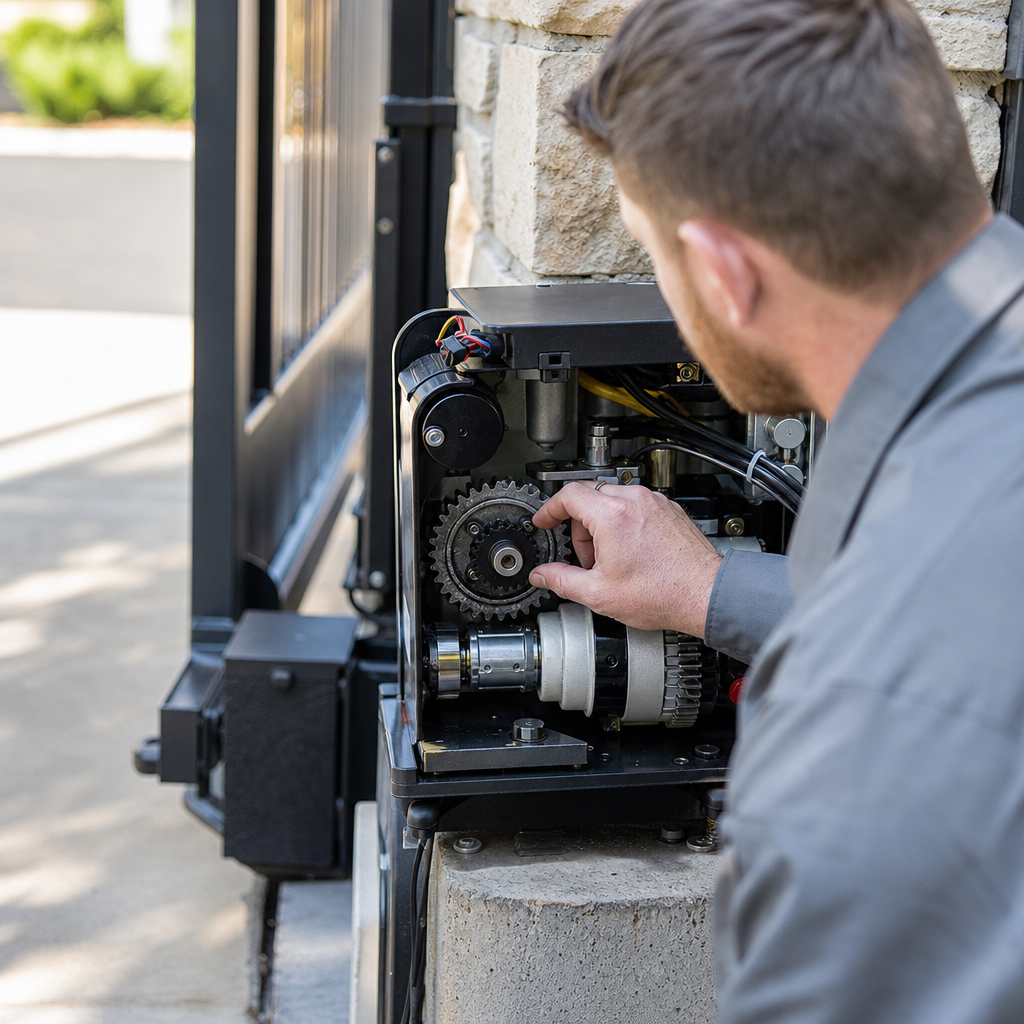
When an automatic gate is stuck open, reverses unexpectedly, or stops during travel, safety sensors or access controls are often involved.
Automatic Gate Sensor Problems
Safety sensors provide entrapment protection. If an optical beam is blocked or misaligned, the operator prevents the gate from closing to protect people and property.
- Insect and debris obstruction: Insects, spiderwebs, and dirt can collect on sensor lenses or within sensor housings. Clean the lenses carefully with a soft, damp cloth.
- Sunlight interference: Direct sunlight shining directly into an optical sensor can cause interference.
- Sensor misalignment: Physical impact or vibration can shift sensor brackets out of alignment. Inspect sensors to ensure they are clean, unobstructed, and properly aligned.
Physical Stops and End-Limit Hardware
Physical positive stops help prevent gates from traveling past their intended limits. A 2024 CPSC meeting log presented California workplace incident data reporting 13 of 16 incidents from 2014 through 2024 involved failed or missing end-stops or positive-stops.[2]
Access Controls and Remote Devices
Access control issues can also cause unexpected gate behavior:
- Remote controls: A depleted battery, stuck button, or signal issue can prevent proper operation. Test with a second control to distinguish a remote issue from an operator issue.
- Radio-frequency interference: Unintended radio-frequency commands can trigger older fixed-code receivers unexpectedly.
- Keypads and hardwired controls: Inspect hardwired accessories for dirt or moisture that may cause false inputs.
Gate Operator Guidelines: Repair vs. Replacement
Need electric gate problems?
We’re available now - call for a fast, free estimate.
When dealing with persistent electric sliding gate problems or swing operator breakdowns, deciding whether to repair or replace a unit depends on the condition of the operator, parts availability, and overall safety compliance.
According to Ironworks Gate Co., minor mechanical issues, sensor cleaning, and realignment are often straightforward to address. However, if the operator has severe structural damage, obsolete electronics, or lacks adequate safety features, replacing the unit may be recommended. For all electrical, motor, and internal component evaluations, consult a qualified technician.
Understanding Driveway Gate Repair and Project Scope
The scope of driveway gate repair depends on whether the issue involves simple maintenance, access controls, structural alignment, or major mechanical components:
- Basic maintenance and sensor service: Cleaning and realigning safety sensors, clearing track debris, and testing remote controls.
- Control and accessory repairs: Checking wiring, replacing remotes, or servicing keypads and access devices.
- Structural alignment: Realigning sagging hinge posts, servicing worn hinges, or leveling damaged tracks to remove mechanical resistance.
- Operator service and replacement: Having a qualified technician service internal motor components, wiring, or installing a replacement operator unit.
Frequently Asked Questions About Electric Gate Repair
Why is my electric gate not opening or closing?
An electric gate that refuses to move may have an interrupted power supply, obstructed or misaligned safety sensors, or a remote control issue. Check the power supply first, ensure the gate path is clear, inspect the safety sensors for dirt, blockage, or misalignment, and try a second control to distinguish a remote issue from an operator issue.
How do you troubleshoot an electric driveway gate?
Start by checking for a clear gate path, inspecting safety sensors for dirt, blockage, or misalignment, and verifying the power supply. Next, try a second control to determine if the issue is with the remote or the operator. For any electrical or motor repairs, contact a qualified technician.[5]
Why does my electric gate keep opening by itself?
A gate that opens on its own may be caused by a stuck remote button or unintended radio-frequency commands, especially with older fixed-code receivers. Check remotes one at a time to identify a malfunctioning unit, or have the receiver checked by a professional.
What causes an automatic gate opener motor to stop working?
As noted by Ironworks Gate Co., an automatic gate motor can stop working due to low voltage from supply or wiring problems, overload protection tripping, or physical obstruction and resistance along the gate path. Always consult a qualified technician for electrical or motor repairs.
How do I manually open an electric gate during a power outage?
Consult the gate manufacturer’s manual for specific instructions on how to safely release and operate the gate manually during a power outage, as manual release procedures vary by model and design.
Need electric gate problems?
We’re available now - call for a fast, free estimate.
Sources
- CPSC NEISS On-Line Query System – cpsc.gov (2025)
- [PDF] 2024-11-20-COPF-CODD-Hummingbird-Alliance-Meeting-Log.pdf – cpsc.gov (2024)
- 40100 – govinfo.gov (2020)
- [PDF] National Electronic Injury Surveillance System – cpsc.gov
- Industrial gate fatality – 12 June 2020 | SafeWork NSW – safework.nsw.gov.au (2020)
Related reading: Residential Gate Entry Systems – Call Now-10% Off – Same-Day Service – Free Estimate
Related reading: Community Gate Access Control | 10% Off & Free Estimate | Same-Day Service
Related reading: Gate Access Control Systems – Call Now-10% Off – Same-Day Service – Free Estimate
Frequently Asked Questions
How do weather and soil conditions cause recurring electric gate problems?
Shifting clay soil can destabilize hinge posts and cause heavy gate leaves to drag or bind, while intense summer heat frequently degrades motor capacitors and ground loop detectors. Ironworks Gate Co. specializes in correcting post geometry and diagnosing heat-related electrical failures. If seasonal ground movement is straining your operator, call their 24/7 live dispatch line for same-day diagnostic service.
How can I tell if my electric gate problem is mechanical binding or a dead motor?
A motor that hums or clicks without moving the gate typically indicates physical drag, misaligned hinges, or an overload trip rather than a complete electrical burnout. If manual movement feels stiff or the frame scrapes against the ground, physical resistance is overworking the drive mechanism. You can schedule a free on-site gate inspection with Ironworks Gate Co. to pinpoint whether hardware realignment or electrical repair is needed.
What should I do if my gate sensors are clean and aligned but the gate still will not close?
When optical sensors appear clear but the gate still refuses to cycle, the problem often involves faulty low-voltage wiring, internal sensor relay failures, or direct sunlight blinding the receiver. Because malfunctioning entrapment devices pose serious safety risks, contact Ironworks Gate Co. to safely test safety circuits and restore automated operation.
About the author
 |
Marcus Henderson Marcus Henderson is an access control specialist with over 10 years of experience in the automated gate industry. He previously worked as a field technician, diagnosing and repairing complex gate systems across North Texas, and now consults on residential and commercial security solutions. Marcus holds an associate degree in electronics technology from Tarrant County College. |
Gate not opening, off track, or opener dead?
We’re available now - call for a fast, free estimate.
Call Now - Free Estimate