
Quick Summary
Modern residential gate entry systems require a balance between physical gate mechanics and low-voltage electronic controls to prevent motor strain, system stalls, and safety failures. Ironworks Gate Co. delivers comprehensive entry solutions by combining heavy-duty mechanical gate alignment with the precision integration of digital keypads, smart intercoms, and UL 325 compliant safety loops. After reviewing hardware options, wiring demands, and diagnostic steps, property owners can schedule a free on-site assessment for residential gate entry system installation or repair.
Residential Gate Entry Systems: Reliable, Fast Access
When an automated driveway gate stops opening, property owners often look first at electronic controls or smart applications. However, automated gate issues frequently stem from physical alignment and mechanical resistance, which can strain the gate operator and cause the system to stall or stop operating properly.
Modern residential gate entry systems combine physical gate mechanics with low-voltage electronic access controls. As specialists at Ironworks Gate Co. note, keeping these systems operating properly requires understanding both the physical structure of swing and slide gates and the access controls that operate them.[3]
Residential Gate Entry Systems: Options and Considerations
Residential Gate Entry Systems in brief: A complete entry setup integrates an automated gate operator with access hardware like digital keypads, intercoms, vehicle detection loops, and safety devices. Long-term operation depends on proper installation, physical alignment, and adequate power delivery.[4]
Choosing an access control setup involves evaluating how residents, visitors, and service providers access the property, as well as the layout of the driveway. When troubleshooting gate systems, addressing issues often requires checking physical gate movement and structural alignment alongside electronic controls.
Modern Access Options for Driveways and Ranches
Today’s residential properties use several primary access control methods:
- Digital and Wireless Keypads: Standalone units mounted near the entrance that allow access using numeric PIN codes.
- Smart Intercoms and Video Stations: Systems connected to mobile devices or local networks that enable voice or video communication and remote gate release.
- Telephone Entry Systems: Hardwired or cellular systems that dial designated phone numbers, commonly used for shared driveways, ranches, and multi-user entrances.
- Long-Range Transmitters and RFID Tags: Vehicle-mounted tags or remote transmitters that signal the gate operator as a vehicle approaches.
Safety Standards and Entrapment Protection
Automated gate safety is an essential consideration for residential installations. The U.S. Consumer Product Safety Commission (CPSC) has documented injuries associated with automated gates, and industry safety standards under UL 325 require entrapment protection on automated gate systems.[1]
Core Entry Components and Mechanical Diagnostics
According to Ironworks Gate Co., proper gate operation requires that the gate hardware and the electronic controls function together smoothly. Checking the physical balance and movement of the gate helps ensure reliable performance and prevents unnecessary strain on the operator.
Intercoms, Cellular Gate Openers, and Keypads
Access control panels and wireless entry devices require stable power and clear communication paths. Stable mounting pedestals and properly sealed wiring enclosures help protect low-voltage connections from moisture, outdoor temperature fluctuations, and physical movement over time.
Vehicle Detection Loops and Safety Sensors
Vehicle loops detect vehicle presence to open the gate or prevent it from closing while a vehicle is in the path. External safety sensors monitor the gate path to help provide required entrapment protection. Proper installation and alignment of these components are necessary for consistent gate operation.
Structural Alignment and Mechanical Movement
Heavy swing and slide gates require solid mounting and level hinges or tracks. If posts or hinges shift, increased mechanical drag can cause the gate operator to pull higher electrical current, leading to motor strain, blown fuses, or system shutoffs.
Basic Gate Diagnostic Steps:
- Check Mechanical Free-Swing: Disconnect the operator drive mechanism and move the gate manually. It should move smoothly across its entire path without binding or dragging.
- Inspect Safety Sensor Alignment: Check that safety sensors and optical indicators are aligned and free of obstructions.
- Check Operating Voltage: Ensure adequate power delivery to the operator and access accessories during gate movement.
Common Gate Access Hardware Options
Need residential gate entry systems?
We’re available now - call for a fast, free estimate.
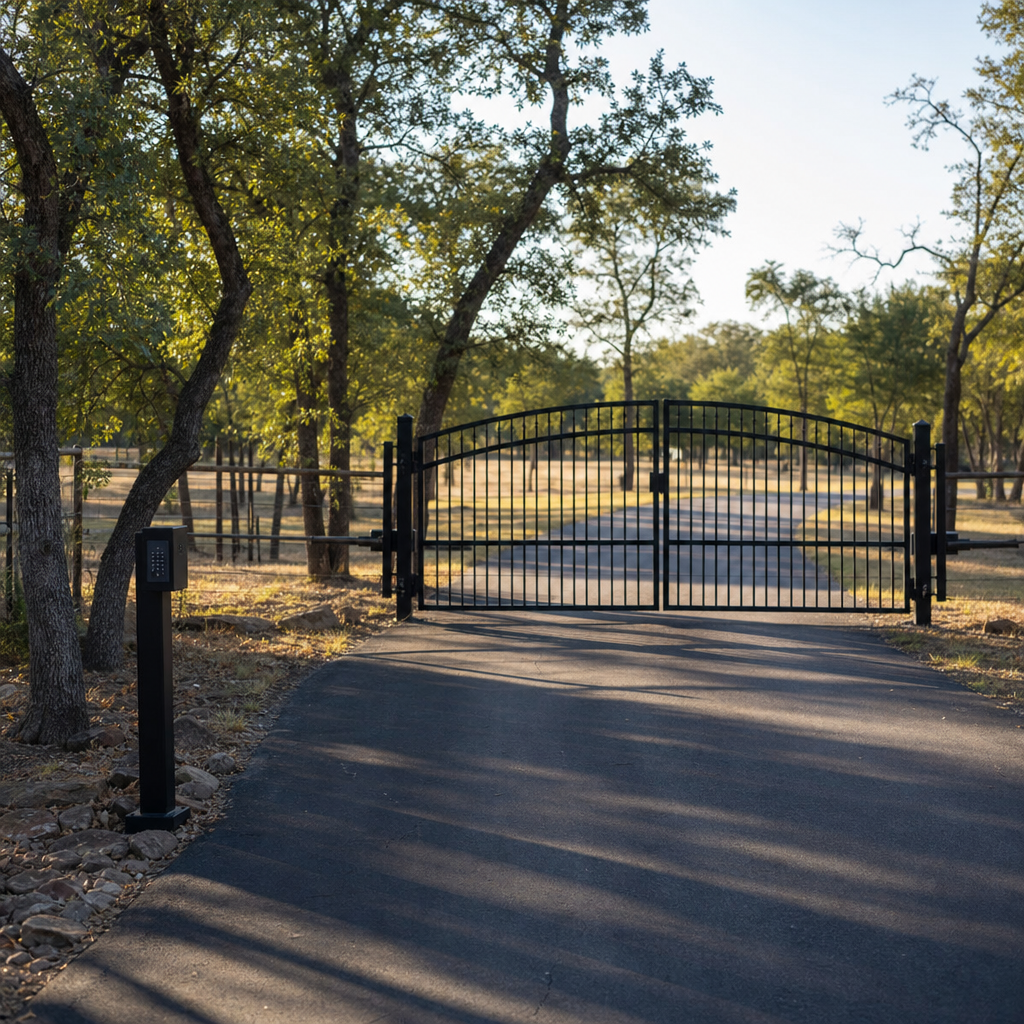
Hardware selection depends on property layout, available power sources, connectivity options, and user preferences.
Smart Video Intercoms and Connected Systems
Connected intercom systems allow users to view camera feeds, manage guest access, and open gates remotely using a smartphone app or network interface. These systems require reliable cellular or wireless network coverage at the gate location.
Telephone Entry and Keypad Systems
Telephone entry systems and commercial-grade keypads offer dedicated access control for single-family homes, shared roads, and rural properties. These units provide durable physical buttons and direct voice communication over landline or cellular networks.
Solar-Ready Gate Operators
For rural properties or remote gate locations where extending high-voltage power lines is impractical, low-voltage solar-ready operators can be paired with solar panels and battery systems to support daily gate cycles.
Project Factors: Costs, Wiring, and Site Preparation
The overall requirements for installing or servicing a residential gate entry system depend on site conditions, trenching distance, power availability, and the condition of the gate hardware.
| Feature | Standalone Keypad | Cellular Video Intercom | Telephone Entry Panel |
|---|---|---|---|
| Access Method | Numeric PIN code | Smartphone app, video and voice | Direct phone call / keypad |
| Recurring Fees | None | Monthly cellular or cloud service plan | Cellular plan or landline service |
| Common Applications | Single-family private drives | Connected homes and estates | Shared driveways and properties |
| Wiring Needs | Low-voltage pair to operator | Low-voltage power and cellular signal | Low-voltage power and phone/data line |
Variables That Impact Gate Access Projects
Key considerations when planning a gate access installation include:
- Trenching and Conduit Runs: Running low-voltage wiring inside protective conduit shields power and communication lines from environmental damage.
- Post and Foundation Stability: Gate posts require appropriately sized footings to maintain alignment over time.
- Battery Backup Power: Battery backup systems allow DC operators to continue basic operation during utility power outages.
Choosing a Gate Access Professional
Automated gate systems involve both structural gate components and low-voltage electrical systems. Professional installation and maintenance, such as that provided by Ironworks Gate Co., typically require experience with mechanical alignment, operator installation, safety device integration, and access control wiring to ensure compliant and reliable operation.
Frequently Asked Questions
What is the best entry system for a residential driveway gate?
The appropriate entry system depends on property needs and site conditions. Video intercoms offer mobile visibility and remote access management, while standalone keypads or traditional telephone entry systems provide simple, robust access without relying on high-speed internet connections.
How much does it cost to install a residential gate entry system?
Installation costs vary widely based on hardware type, site conditions, trenching requirements, and power access. Basic keypad setups represent the lower end of equipment complexity, while video intercoms, solar power packages, or extensive wiring runs require larger investments. Specific project pricing depends on local market rates and site layout.
Can I control my residential gate entry system with a smartphone?
Yes. Smart gate controllers and cellular intercoms connect through Wi-Fi or cellular networks, allowing users to open gates remotely, monitor gate status, and manage access credentials from a smartphone.[2]
What happens to an electric gate entry system during a power outage?
Systems equipped with battery backup can continue operating for a limited number of cycles during an outage. Automated gate systems also include manual release mechanisms so the gate can be opened by hand if power is completely lost.
What is the difference between keypad, card reader, and cellular gate access?
Keypads grant access through a numeric code entered on-site. Card or RFID readers authenticate physical credentials held near a reader. Cellular systems connect to mobile devices or landlines, enabling two-way communication and remote release.
Why does my gate stop halfway or reverse on its own?
A gate may stop or reverse if an obstruction triggers a safety sensor, if sensors are misaligned, or if mechanical resistance causes the operator to exceed its travel force limits.
Need residential gate entry systems?
We’re available now - call for a fast, free estimate.
Sources
- New Safety Standard for Automatic Security Gates Helps … – cpsc.gov (2000)
- Research and Reports – cpsc.gov
- Residential Gate Operators And Systems Market Size, Future Growth and Forecast 2033 – strategicrevenueinsights.com (2033)
- Gate Operators Sales Market Research Report 2034 – dataintelo.com (2034)
Related reading: Gate Access Control Systems – Call Now-10% Off – Same-Day Service – Free Estimate
Related reading: Community Gate Access Control | 10% Off & Free Estimate | Same-Day Service
Frequently Asked Questions
How do emergency responders access properties with automated residential gate systems?
Emergency access is typically handled through Knox rapid-entry key switches, siren-activated sensors, or specialized strobe detectors integrated into the control board. Ironworks Gate Co. installs these UL 325-compliant emergency bypass devices to ensure first responders can enter promptly without damaging your gate hardware.
How far from the main home can a residential gate entry system operate?
Hardwired keypad and intercom systems can run hundreds of feet using properly gauged, direct-burial conduit, while cellular-connected systems can operate at unlimited distances provided there is mobile network reception. Ironworks Gate Co. evaluates driveway length and connectivity during on-site assessments to recommend the most cost-effective wiring or wireless design.
How often should residential gate entry systems and mechanical hardware be serviced?
Gate entry systems should receive a professional inspection at least once a year to test safety sensor alignment, hinge lubrication, and electrical connections. Routine preventative maintenance from Ironworks Gate Co. helps prevent motor burnout by identifying mechanical drag and soil shifting before they damage the operator.
About the author
 |
Marcus Henderson Marcus Henderson is an access control specialist with over 10 years of experience in the automated gate industry. He previously worked as a field technician, diagnosing and repairing complex gate systems across North Texas, and now consults on residential and commercial security solutions. Marcus holds an associate degree in electronics technology from Tarrant County College. |
Gate not opening, off track, or opener dead?
We’re available now - call for a fast, free estimate.
Call Now - Free Estimate