
Last updated August 25, 2026
Free on-site gate assessment - hinges, posts, and your LiftMaster or Nice gate operator checked before anything is quoted
The assessment is free and the quote is the invoice.
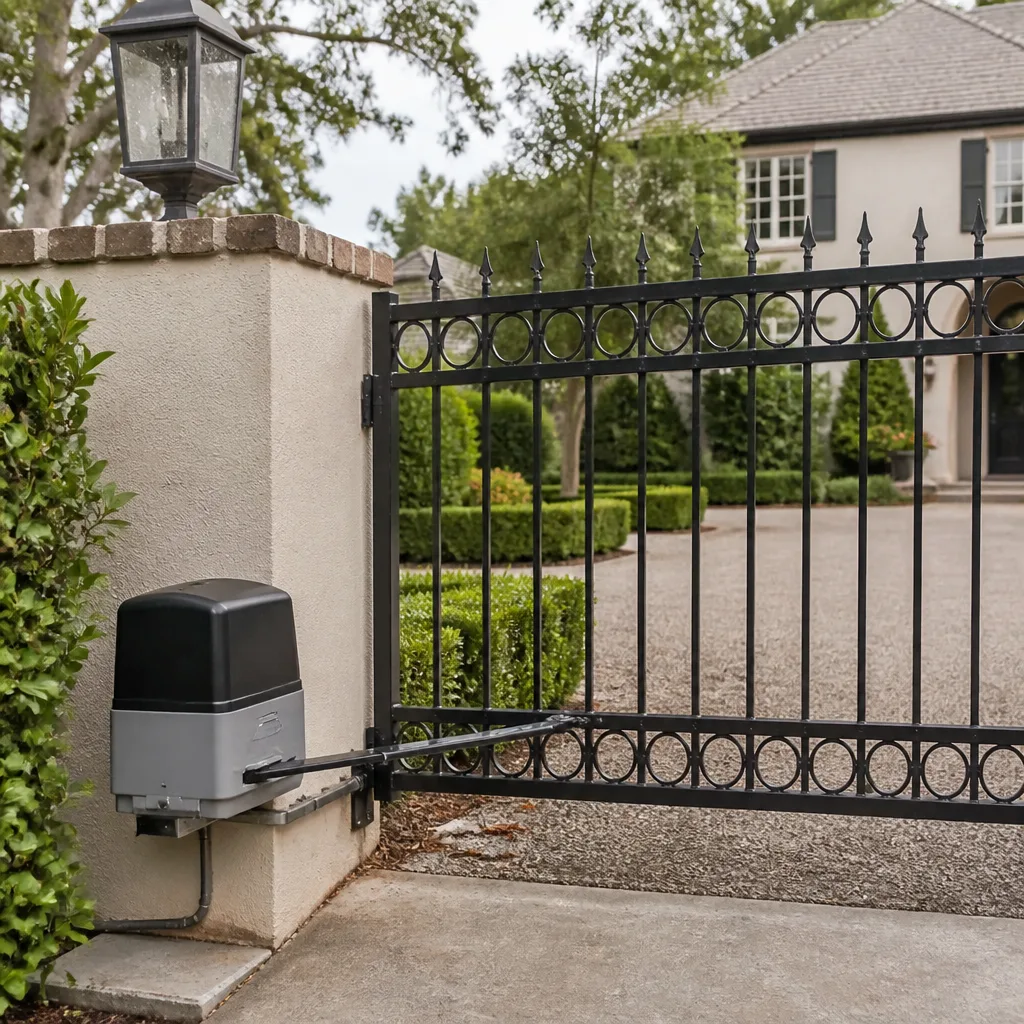
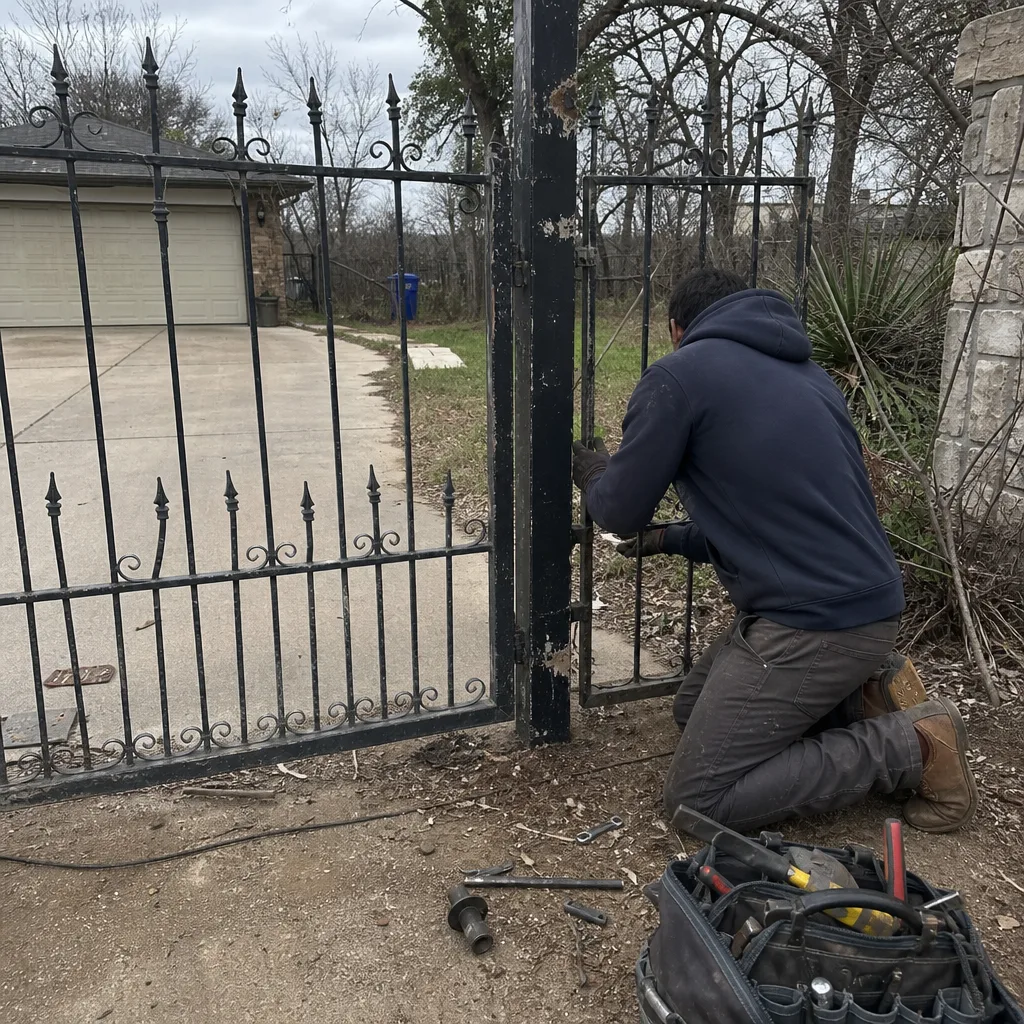 Before
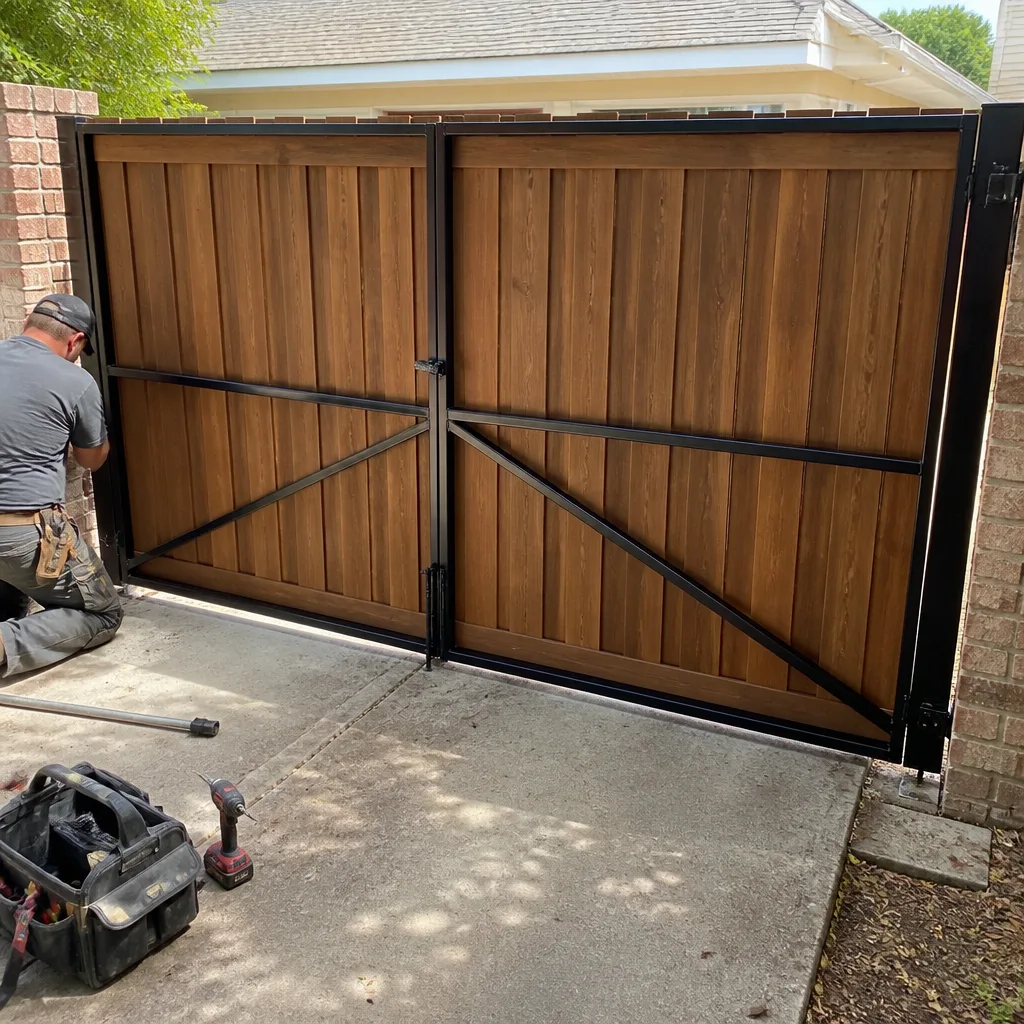 After
After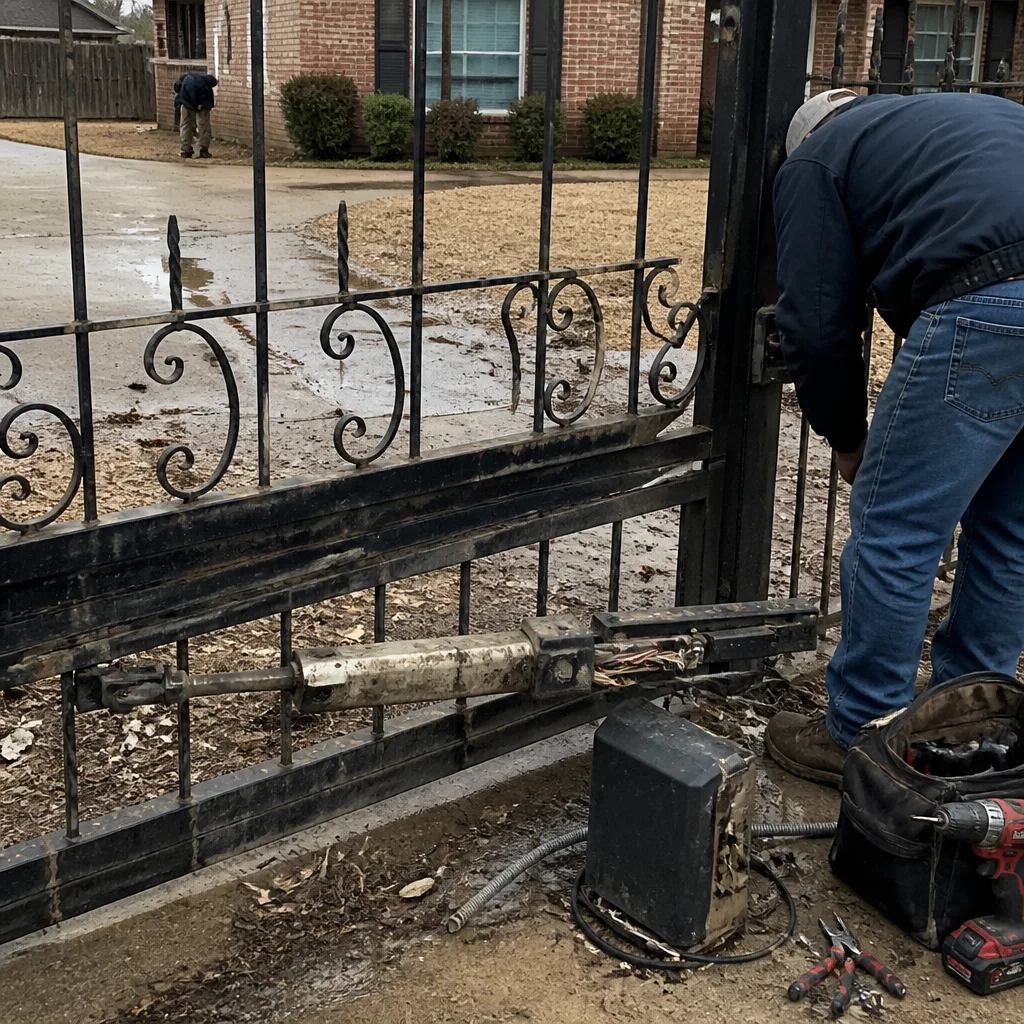 Before
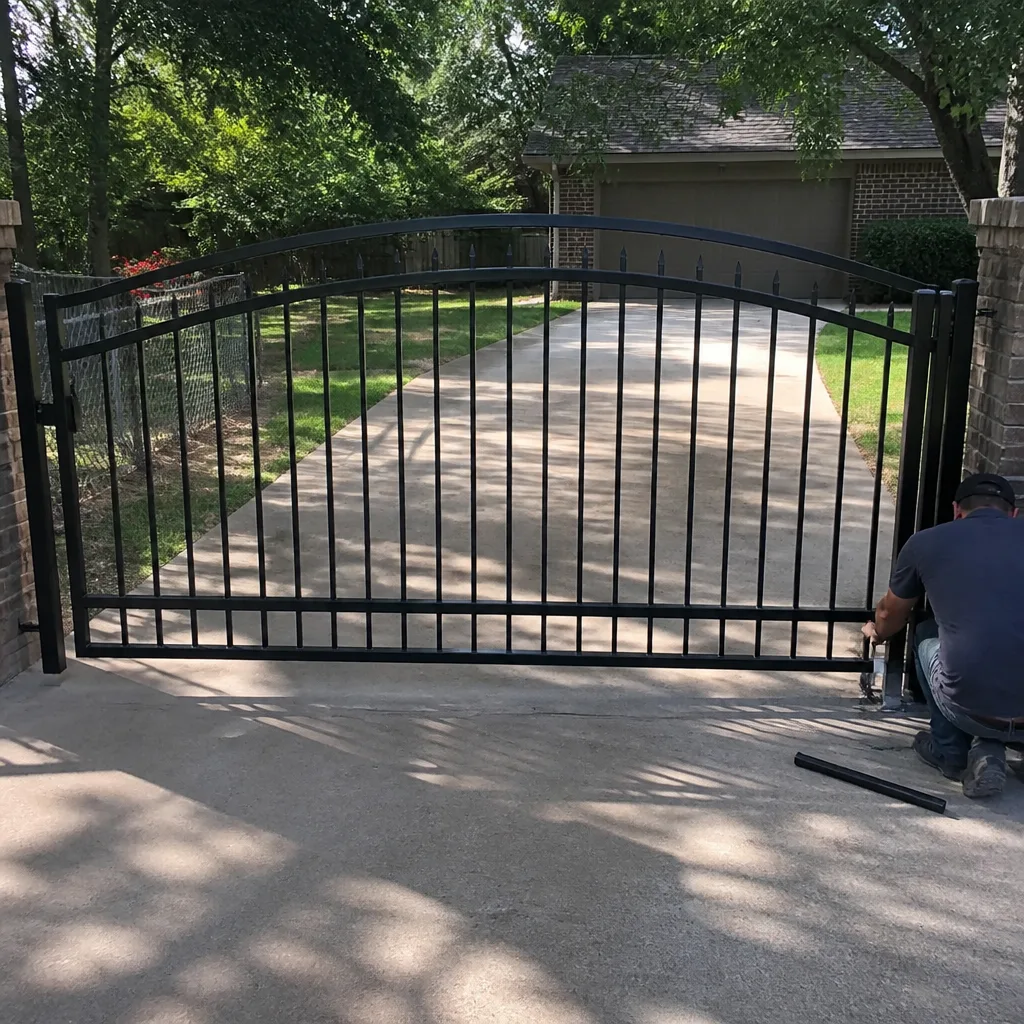 After
After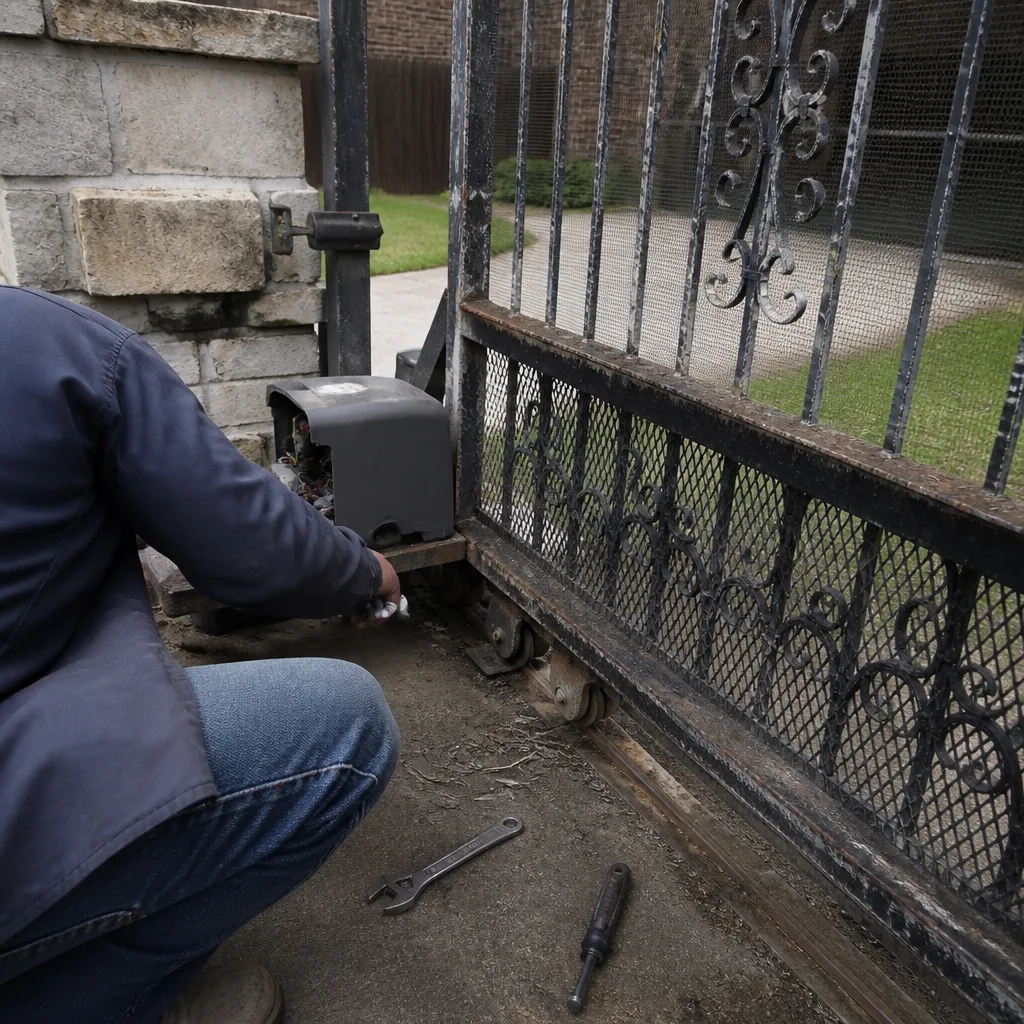 Before
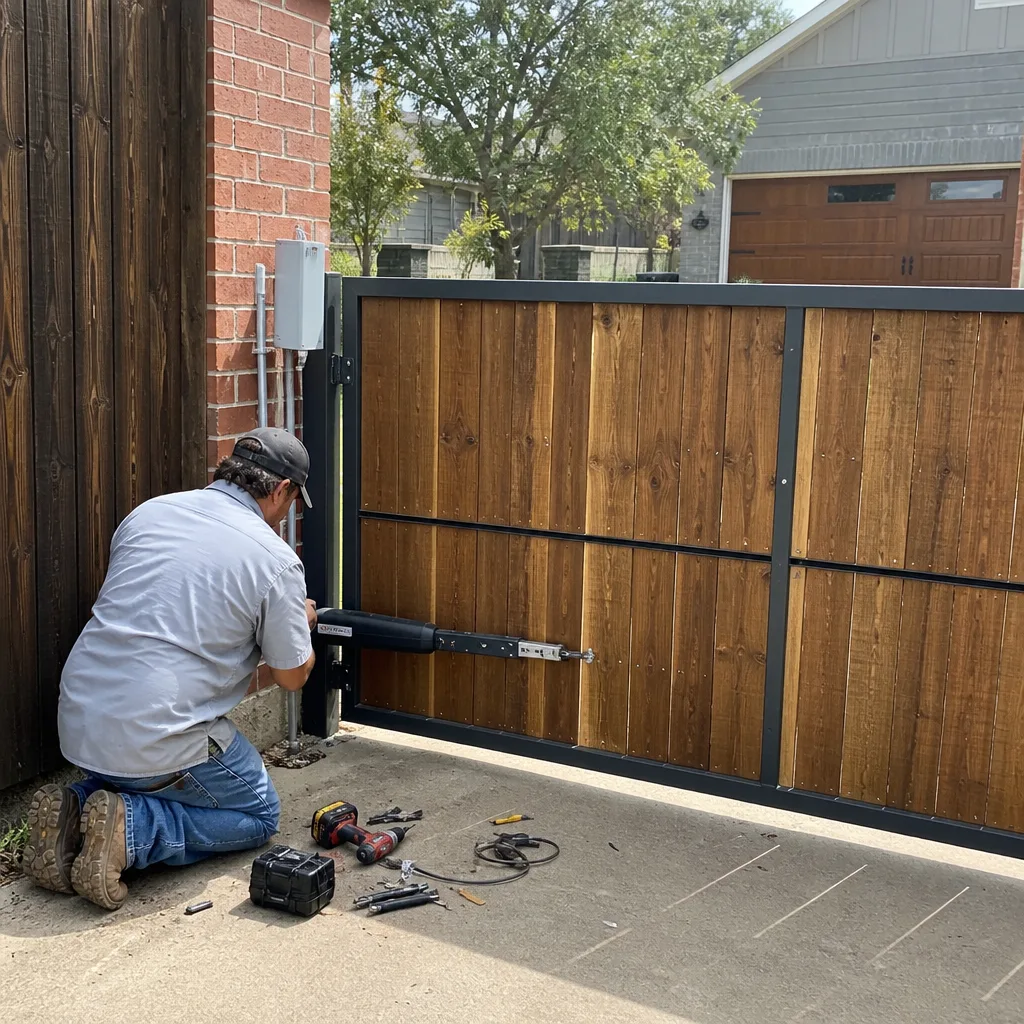 After
AfterGate Repair Permits, Codes & Inspections in TX: What You Need to Know
Most Texas homeowners assume a gate repair is a simple swap of a hinge or a motor, and they’re half right. The physical work is often straightforward. The paperwork is where good people get tripped up. A gate that swings over a public sidewalk, a driveway gate taller than eight feet, or an electric opener added to a gate that has stood manual for thirty years can each trigger a permit requirement in Texas. Get it wrong and you are not just looking at a fine. You are looking at a lien risk when you sell, a denied insurance claim after a storm, and an inspector who will not sign off until the whole assembly is brought to current code. This guide covers what actually requires a permit, which codes govern gates in Texas, how inspections work, and what it all costs. We have been repairing and installing gates in Cleburne and the surrounding counties for over 42 years, and we have seen every variation of the permitting question. Here is what you need to know.
Quick Answer
In Texas, simple gate repairs like replacing hinges, welding a cracked frame, or swapping a failed opener motor rarely require a permit. New gate installations, gates on commercial properties, driveway gates over a certain height, and any work that runs new electrical lines from the house to the gate typically do require one, and almost all automatic gates must meet UL 325 safety standards and ASTM F2200 construction standards regardless of whether a permit was pulled. Municipalities vary, so before any gate work begins, a call to your city’s building department or a licensed gate contractor familiar with your local codes will save you time and money. In Cleburne, most residential driveway gate repairs on existing gates do not need a permit, but we will verify that for your specific property before we touch a single bolt.
Table of Contents
- Do You Need a Permit for Gate Repair or Installation in Texas?
- Texas Codes That Govern Gates: UL 325 and ASTM F2200
- Permits in Cleburne and Johnson County: What We See in the Field
- Electrical Work on Automated Gates: The Permitting Line
- What a Gate Inspection Actually Covers
- What Permits and Inspections Cost in Texas
- Safety Systems the Codes Require on Every Automatic Gate
- Common Mistakes to Avoid
- When to Call a Professional
- Frequently Asked Questions
- The Bottom Line
Do You Need a Permit for Gate Repair or Installation in Texas?
The short answer: it depends on what you are doing and where your property sits. Texas does not have a single statewide gate permit requirement. Building permits are issued at the city or county level, which means a homeowner in Cleburne, a homeowner in Fort Worth, and a homeowner in an unincorporated part of Johnson County can face three different answers to the same question. What is consistent across the state is the trigger: permits are generally required when the work changes the structure, the use, or the electrical load of a property.
Here is how that plays out in practice on a driveway gate:
- Repairing an existing hinge, welding a cracked frame member, or replacing a worn roller: No permit needed in nearly every Texas jurisdiction. This is maintenance on an existing structure.
- Replacing an existing gate opener motor with a like-for-like unit: Usually no permit needed, because the electrical circuit already exists.
- Installing a brand-new gate across a driveway where no gate existed before: A permit is often required, especially if the gate is on a corner lot, near a sidewalk, or taller than the local limit.
- Running new electrical wire from the house panel or a new subpanel to power an automatic opener: A permit is almost always required. This is new electrical work, and Texas cities treat it the same as adding an outlet or a light fixture.
- Installing a gate opener on a commercial property, an HOA entrance, or an apartment complex: Permits are required. Commercial gates fall under stricter life-safety codes, and the inspection is not optional.
We have worked on gates in Cleburne where a previous handyman installed a new opener by splicing into an existing landscape lighting circuit. That worked for about a year. Then the GFCI tripped, the gate went dead, and the homeowner found out a permit had never been pulled and the wiring was never inspected. Fixing that mess cost three times what a proper permit and inspection would have cost in the first place. The rule we tell every customer: if new wire is being run or a new structure is being built, assume you need a permit until the city says otherwise.
Texas Codes That Govern Gates: UL 325 and ASTM F2200
Two documents control almost every automatic gate in the United States, and Texas is no exception. They are not suggestions. They are the standard that municipalities, inspectors, insurance companies, and courts hold gate owners and gate installers to.
UL 325: The Safety Standard for Gate Operators
UL 325 is the safety standard published by Underwriters Laboratories for gate operators and other automatic systems. It was written after a series of fatalities involving automatic gates, and it mandates specific safety features on every motorized gate. In Texas, if your gate has a motor, it is expected to comply with UL 325, regardless of whether anyone ever inspects it. The most important requirements are:
- Entrapment protection devices: Every automatic gate must have at least two independent means of detecting and preventing a person, child, or pet from being pinned or crushed. This typically means photoelectric sensors across the gate opening, contact edges on the leading and trailing gate edges, or both.
- Gate speed and force limits: The operator must be set so the gate moves slowly enough to stop before causing injury and reverses when it meets resistance.
- Warning signage: Automatic gates require visible warning signs posted on both sides, alerting people that the gate operates automatically.
- Manual release: Every automatic gate must have a way to disconnect the motor and operate the gate by hand during a power outage or emergency.
ASTM F2200: The Construction Standard for Vehicle Gates
ASTM F2200 is the construction standard for vehicular gates. It governs how the gate itself is built, not just how the motor works. It covers minimum height clearances, maximum opening widths, structural strength, and the placement of horizontal members that can trap a climber’s foot or hand. A gate that does not meet ASTM F2200 can pass a motor inspection and still be a liability. We routinely see older Cleburne ranch-style gates built with horizontal cross-bars spaced too far apart, and a child can get a foothold and climb right over. That is exactly the failure ASTM F2200 was written to prevent.
The practical takeaway: if you are buying a new gate or rebuilding an old one, make sure the fabricator builds to ASTM F2200. If you are adding a motor to an existing gate, the entire assembly, gate and operator together, must meet both standards. Many older gates do not, and that is one of the first things we flag on a new opener quote.
Permits in Cleburne and Johnson County: What We See in the Field
Cleburne sits in Johnson County, and the permitting reality here reflects the mix of incorporated neighborhoods, older farm-to-market roads, and new development that defines the area. The City of Cleburne requires permits for new construction and for electrical work, which is the standard in most Texas municipalities. What that means for your gate is simple: rebuilding an existing gate frame, replacing hinges, or swapping a dead opener for a new one does not require a municipal permit. Installing a new gate post in concrete, building a new slider track bed, or running a dedicated circuit to a new opener typically does.
One thing we have learned over 42 years in this market is that Cleburne homeowners often live on lots that were platted decades ago, before automatic gates were common. A driveway that was fine for a manual farm gate sometimes sits too close to the right-of-way for a modern automatic slide gate. In those cases, a setback variance can be required, and that is a conversation with the city’s development services office rather than a simple permit pull. We have walked customers through that process more times than we can count, and it is rarely as intimidating as it sounds, but it does take time, so plan for it before you order a gate.
Unincorporated Johnson County properties are different. The county generally has lighter permitting requirements than the city, but utility easements and right-of-way considerations still apply. A gate built across a driveway that serves as emergency access for a fire district can draw a costly correction order if it blocks emergency vehicles. We recommend every homeowner confirm their property’s status before any new gate goes in, whether it is on a city street or a county road.
Electrical Work on Automated Gates: The Permitting Line
Here is the part most homeowners do not think about until the opener goes dead: the electricity that powers a gate is a real electrical installation, and it is subject to the National Electrical Code as adopted by Texas. When a gate opener is installed by a responsible contractor, the power comes from a dedicated circuit, usually 120-volt, run from the main panel or a subpanel to a GFCI-protected outlet or junction box near the gate. That run requires a permit in Cleburne and in most Texas cities.
The permit is not a formality. An inspector will verify that the wiring is the right gauge for the distance, that the conduit is buried to the correct depth or properly exposed, that the GFCI protection is present, and that the circuit is properly grounded. A gate opener on a shared circuit with a garage door opener, pool pump, or lighting circuit is a code violation, and it is also a reliability problem. Openers draw a surge of current when they start, and a shared circuit can trip at the worst possible moment.
Solar-powered openers are a different animal. A solar panel mounted on the gate or a nearby post, charging a battery that powers the opener, does not require an electrical permit, because there is no line-voltage wiring. That is one reason solar kits have become popular on rural Johnson County properties where trenching 300 feet of wire from the house is impractical. The tradeoff is that solar openers generally move gates more slowly and are more sensitive to cloudy stretches and cold weather. We install both, and we walk each customer through the math before they decide.
What a Gate Inspection Actually Covers
If your gate project does require a permit, expect an inspection. The process in Cleburne and most Texas cities follows a predictable sequence.
- Permit application: You or your contractor files the application with the city, describing the scope of work. For electrical work on a gate, this is usually tied to the electrical permit rather than a standalone gate permit.
- Rough inspection: For new construction or major rebuilds, the inspector comes out when the posts are set and the concrete is poured but before the gate is hung and before wiring is covered. They check post depth, footing size, and conduit placement.
- Electrical inspection: The inspector verifies the circuit, grounding, GFCI protection, and proper disconnect. This happens before the trench is backfilled or the conduit is covered.
- Final inspection: The gate is hung, the opener is installed, and all safety devices are in place. The inspector tests the gate’s reversal function, observes that the sensors are working, and confirms that the gate does not swing into a public right-of-way or create a visibility hazard.
Most inspections take less than thirty minutes. A well-prepared contractor has the gate operational before the inspector arrives and has the required documentation, including the UL 325 compliance certificate for the opener and the ASTM F2200 compliance statement for the gate structure, ready to hand over. We have never had a properly prepared inspection fail in Cleburne. The ones that fail are the ones where someone tried to hide the wiring or skip the safety edges.
What Permits and Inspections Cost in Texas
Permit fees are not where the money goes on a gate project, but they are real. Here is a realistic picture of what Texas homeowners can expect.
Typical Permit and Inspection Fees
- Residential electrical permit for a gate opener circuit: $40 to $150 in most Texas municipalities, including Cleburne and Johnson County.
- Building permit for a new gate structure (if required): $50 to $300, depending on valuation and municipality.
- Re-inspection fee (if the first inspection fails): $50 to $100 per visit. This is the one most homeowners pay unnecessarily, and it is almost always because the contractor was not ready.
- HOA architectural review application: $0 to $100, where an HOA exists. Many Cleburne-area HOAs require written approval before a gate goes up, and that is separate from the city.
The bigger cost is time. A permit and inspection add a few days to a week to a new gate installation, because you are waiting for the inspector’s schedule. That can feel frustrating when your gate is lying in the driveway. But the alternative, doing electrical work without a permit and having it discovered when you sell the house, can cost you the sale or a post-closing repair demand. Texas is a seller’s disclosure state, and unpermitted work has to be disclosed. We have had customers call us after a home sale fell through over unpermitted gate wiring. The repair and retroactive permit came to about $1,200, and the house sold a month later. The inspection fee was the cheapest part of the whole saga.
Safety Systems the Codes Require on Every Automatic Gate
We want to be direct here because this is the part of gate work that can hurt someone. Automatic gates are heavy. A typical steel driveway gate weighs between 400 and 1,500 pounds. When a motor moves that kind of weight, it can crush a person against a post without slowing down unless the safety systems are present and working. UL 325 exists because people, including children, have died under automatic gates. This is not a corner to cut, and we do not cut it.
Every automatic gate, whether it is a BFT hydraulic operator on an estate gate in Cleburne, a Linear screw-drive on a suburban slider, or a Ghost Controls solar kit on a rural Johnson County driveway, must have the following as a minimum:
- Photoelectric sensors: A beam across the gate opening that stops and reverses the gate when anything breaks the beam.
- Contact edges or an equivalent entrapment sensor: A pressure-sensitive edge on the leading and trailing edges of a slide gate, or on the bottom edge of a swing gate, that reverses the gate on contact.
- Force settings set correctly: The opener should reverse when it meets resistance equivalent to a child’s weight. A gate set to push through a 200-pound obstacle is a weapon.
- Warning signs: Posted on both sides of every automatic gate, visible and legible.
- Manual release: A keyed or tool-operated release so the gate can be pushed open by hand in an emergency.
On swing gates, there is an additional geometry concern: the gap between the gate and the post as it opens. A child’s arm can be caught in that pinch point, and a properly designed swing gate installation either keeps that gap under two inches or covers it with a guard.
These requirements are not optional because an inspector might look. They are required because the gate will be there for twenty years, and the people who live behind it will change. We repair gates installed by other companies that never had sensors wired in, and the homeowner had no idea anything was missing. That is the first thing we point out.
Common Mistakes to Avoid
- Assuming your handyman pulled a permit. Ask for the permit number. If the answer is vague, call the city. In Cleburne, the building department can tell you in five minutes whether a permit exists for your address. Handymen in Texas are not allowed to pull electrical permits, which means unpermitted gate wiring is a near-certainty when the work was done by a general handyman.
- Skipping the HOA approval. Johnson County has dozens of subdivisions with active HOAs, and many have architectural guidelines that specifically restrict gate height and appearance. The city may not care. The HOA can and will fine you monthly until the gate is altered.
- Installing a manual gate and adding an opener later without a safety review. That 1980s ranch gate may have horizontal rails spaced for cattle, not for ASTM F2200. Adding a motor to a non-compliant gate creates a liability you now own.
- Picking the cheapest trenching quote. Gate opener wire run in a 6-inch trench without conduit will fail, and it is a code violation the moment it is buried. The National Electrical Code requires appropriate depth and protection, and an inspector who sees an open trench with bare cable will fail you on the spot.
- Buying a gate panel online and expecting it to pass inspection. Many online gates are not built to ASTM F2200. They are decorative. Hook a motor to one and you have a 600-pound decorative hazard.
- Ignoring the vehicle conflict zone. A swing gate that opens toward the street must have enough setback that a car waiting at the gate is not pushed back into traffic. Get this wrong on a busy Cleburne collector street and the city will require you to reverse the gate swing at your cost.
- Not budgeting for trenching distance. The electrical run from the house panel to a gate 200 feet down the driveway is a significant part of the project cost. Homeowners often budget for the gate and opener and forget the wire, conduit, trencher time, and permit for the electrical work.
When to Call a Professional
Some gate work is a Saturday-morning job. Replacing a loose hinge bolt, greasing a roller track, or resetting a keypad is the kind of thing a careful homeowner can handle. The line is real, and it sits at the edge of your competence. Any time the work involves the force of the gate, the power that drives it, or the safety devices that protect your family, that is professional territory. A spring-loaded gate opener, a gate that has come off its track, a motor that sparks or trips a breaker, a gate that reverses for no reason, a sensor that has stopped working: these are not learning opportunities. A 1,200-pound gate under motor control can break bones or worse when it moves unexpectedly. We never tell homeowners to “give it a try” on an automatic gate, and we do not suggest anyone rebuild a gate post in concrete without the right tools and an understanding of frost line and soil movement in North Texas clay. An unevenly set post is a gate that drags, sags, and eventually fails. Ironworks Gate Co. offers free estimates in Cleburne, call (817) 961-9404, and we will tell you honestly whether your job is a handyman fix or a gate technician’s job.
Frequently Asked Questions
No, not for ordinary repairs like hinge replacement, welding, roller swaps, or putting a new motor on an existing circuit. Permits come into play when you build a new gate, change the gate’s electrical wiring, or install a gate where one did not exist. If you want certainty for your specific situation, call us at (817) 961-9404 and we will check before the work starts, free.
The city can issue a stop-work order, require a retroactive permit, and charge a penalty fee that is typically double the original permit cost. When you sell the home, unpermitted work must be disclosed, and many buyers will demand the work be corrected or the price reduced. The retroactive fix usually costs more than the original permit would have.
Yes. If your Cleburne-area home is in a subdivision with a deed-restricted HOA, the HOA’s architectural guidelines are legally binding. They can require you to remove a non-compliant gate and can levy fines in the meantime. Always check HOA rules before ordering a gate.
For a residential gate opener electrical permit, expect $40 to $150. A building permit for a new gate structure, when required, runs $50 to $300 depending on the project value. Plan for the cost of an electrical inspection as part of the permit fee. For a precise current number, call the Cleburne building department or ask us and we will point you to the right desk.
Solar gate openers that are fully self-contained, with the panel and battery mounted at the gate and no line-voltage wiring, do not require an electrical permit in Texas. The gate structure itself may still need a permit if it is a new installation. Solar is a practical choice on rural Johnson County properties with long driveway runs.
UL 325 is the safety standard for automatic gate operators, requiring entrapment protection, force limits, warning signs, and a manual release. Any UL 325 compliant opener will say so on the unit’s labeling and documentation. If your opener was installed more than ten years ago or installed by a generalist, it might not meet current UL 325, and we can check it during any service call. Call (817) 961-9404 to schedule.
The Bottom Line
Gate repair in Texas sits at an unusual intersection: most of it needs no permit at all, and the slice that does need one is non-negotiable. The dividing line is electricity and new construction. A hinge replacement is maintenance. A new circuit run to a brand-new automatic gate is an electrical installation, and it deserves a permit, an inspection, and a licensed contractor. The safety standards, UL 325 and ASTM F2200, apply whether or not anyone is watching, because they exist to keep people from being hurt by a half-ton of moving steel. In Cleburne and Johnson County, the practical rule is simple: call the city if you are not sure, and call a gate specialist who has been through this process hundreds of times. The cost of doing it right is measured in tens of dollars. The cost of doing it wrong is measured in years. For a free estimate and an honest read on your gate, call Ironworks Gate Co. at (817) 961-9404, or visit our Ironworks Gate Co. home page to learn more about how we work.
Written by Victor Salinas, Owner at Ironworks Gate Co., serving Cleburne since 2013.